
Ask About Delivery & Nationwide Shipping Options
If you’d like to learn about upcoming litters, or be added to our waiting list for our 2027 breeding, please Contact Us
*Click any image to enlarge
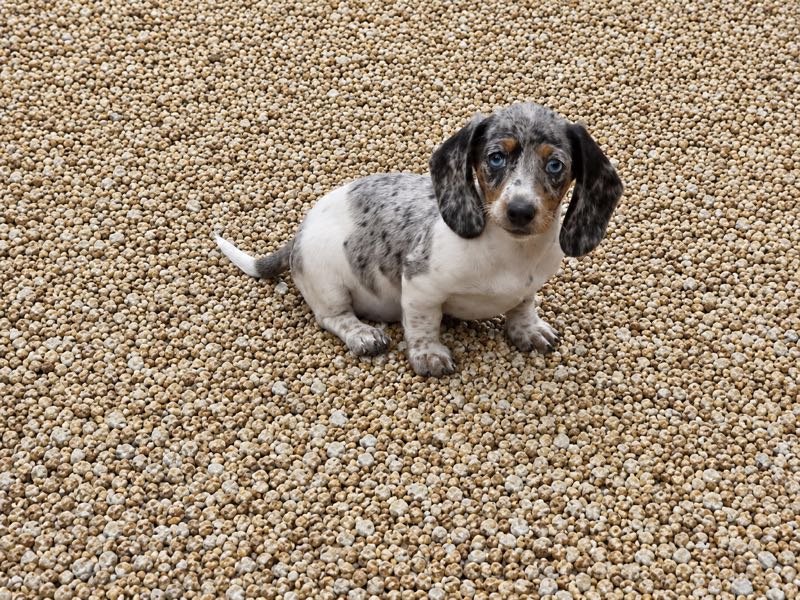
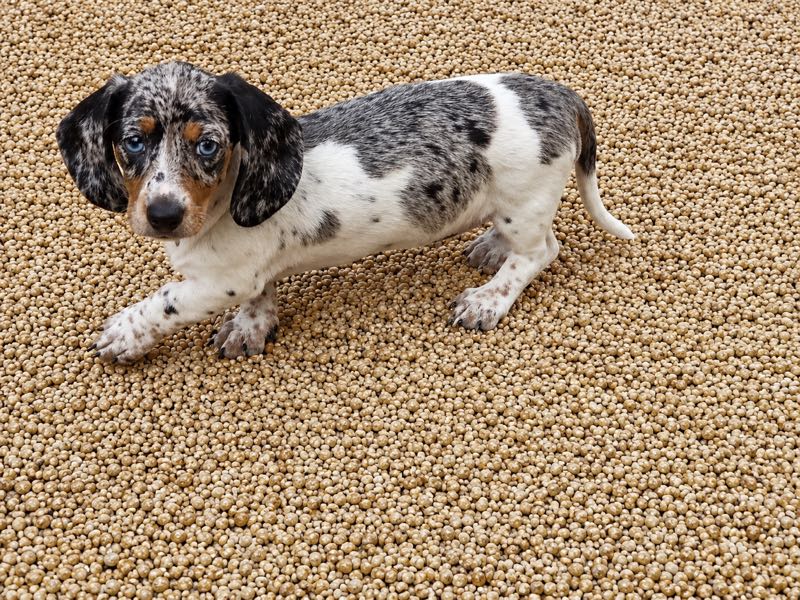
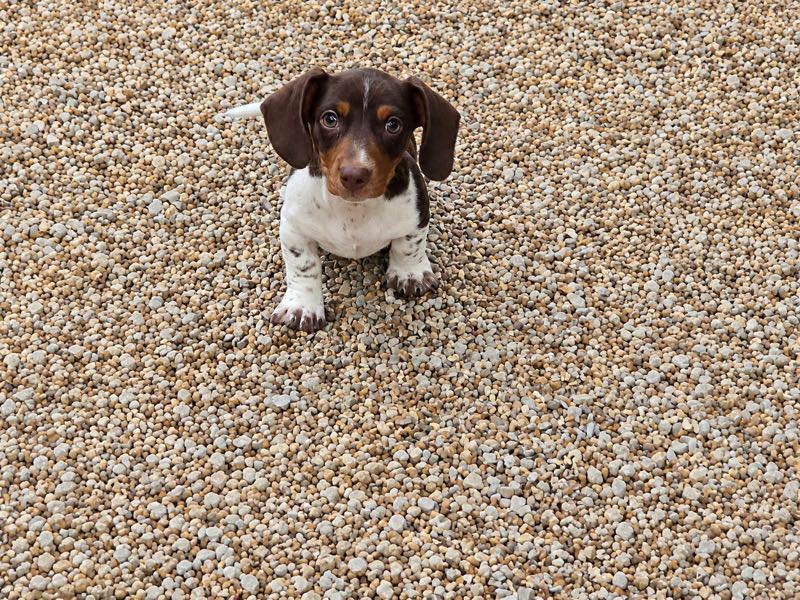
Incredibly and exciting for us at PoeHill Puppies! Dachshunds, are absolute champions at stealing hearts with those big personalities, loyal streaks, and iconic silhouettes. There is nothing quite like a puppy pile of “wiener dogs” to bring a ton of energy and joy to a place. There is truly nothing quite like a litter of sweet, wrinkly “wiener dog” puppies.
Since you are in the planning phases for PoeHill, where are you focusing your vision? Are you leaning toward the standard or miniature size, or do you have a specific coat type in mind—like the sleek smooths, the elegant longhairs, or those spunky wirehairs?
Puppies start at $1000 and up.
Contact Us

(Parents of Above Litter)
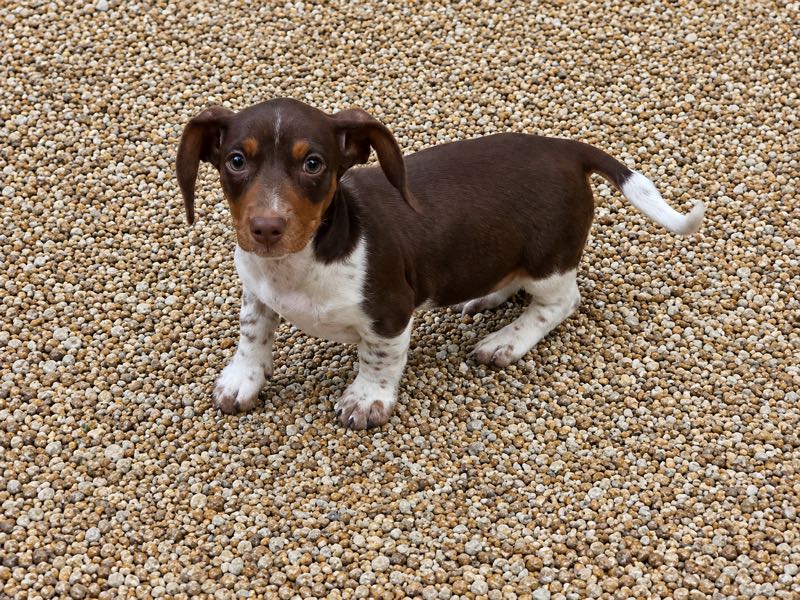
Macy pictured below, our spunky Dachshund Puppies!
Click image to enlarge
Puppy Adoption Information
Here you will find more information about bringing home the Dachshund puppies we have for sale in Ponoma, MO. Please Contact Us if you are interested in our future litters.
Before reserving a puppy, please read our Policies, which covers things like our health guarantee and shipping options. If you have any questions, Contact Us.
Each one of our Dachshund puppies comes with the following:
- Registration (where applicable) Most likely AKC registered
- Vet exam/health certificate
- Medical Record (Up to date on all Vaccinations)
- Vaccinations and deworming
- 1-year health guarantee
- PreSpoiled
- Started on Potty training
- Microchip
After you have paid your deposit, we will contact you asap to schedule your pick up date and time. Please call or Contact Us with any questions!
Be Added to our Dachshund Waiting List for 2027?
To reserve your spot on our Dachshund waiting list, Contact Us today. Puppies will be chosen once individual puppy photos are taken and in the order deposits are received.
About the Dachshund
ComingWelcome to the wonderful, slightly chaotic, and incredibly rewarding world of ethical dog breeding. If you are preparing to bring sweet, loving Dachshunds into the world at PoeHill, you are embarking on a journey that requires a delicate balance of science, heart, sleepless nights, and deep dedication to the breed.
Dachshunds are iconic—not just for their distinct silhouette, but for their massive, hound-like personalities packed into compact bodies. To help PoeHill establish a foundation rooted in excellence, health, and stellar temperaments, here is a comprehensive blueprint for your future breeding program.
1. Establishing the PoeHill Standard: Health & Genetics
The hallmark of a truly “sweet and loving” Dachshund starts long before the puppies are born. It begins with rigorous health screening of the sire (father) and dam (mother) to ensure you are bettering the breed.
- Intervertebral Disc Disease (IVDD): Because of their elongated spines and short legs (chondrodysplasia), Dachshunds are genetically predisposed to back issues. Screen your breeding stock via X-rays (scoring for disc calcification) and choose dogs with robust toplines and excellent muscle tone.
- Ophthalmology (OFA/CERF): Dachshunds can carry genetic traits for Progressive Retinal Atrophy (PRA), which causes blindness. DNA testing and annual eye exams by a certified veterinary ophthalmologist are vital.
- Advanced Genetic Panels: Utilize DNA mapping (such as Wisdom Panel or Embark for Breeders) to screen for over 200 genetic conditions, including Osteogenesis Imperfecta (brittle bone disease) and variant coat/color issues like the “double dapple” gene, which can cause severe blindness and deafness and must be avoided.
2. Nurturing the “Sweet & Loving” Temperament
While Dachshunds were originally bred to be fierce, independent badger hunters, modern companion Dachshunds should be affectionate, confident, and loyal. Temperament is highly heritable.
- The Dam’s Disposition: A nervous, anxious, or aggressive mother will pass those traits onto her puppies, both genetically and behaviorally through her early maternal care. Your foundational dams should be calm, well-socialized, and deeply trusting of humans.
- Early Neurological Stimulation (ENS): Implement the Biosensor program (or “Super Dog” program) from days 3 to 16 of the puppies’ lives. These simple, brief tactile stressors stimulate the neurological system, improving cardiovascular performance, stronger heartbeats, and greater tolerance to stress later in life.
- The Rule of 7s: By the time a PoeHill puppy goes to its forever home at 8 to 10 weeks, it should have:
- Been on 7 different surfaces (carpet, tile, grass, concrete, wood, gravel).
- Played with 7 different types of objects (balls, crinkly toys, metal pans, plastic bottles).
- Met 7 different types of people (children, elderly people, men with beards, people in hats).
- Been exposed to 7 different challenges (climbing steps, walking through a tunnel, crates).
3. Designing the PoeHill Whelping & Rearing Environment
Creating a dedicated, biosecure, and serene space for your dam to give birth and raise her litter is crucial for their early development.
+-------------------------------------------------------------+
|                     POEHILL WHELPING ROOM                   |
|                                                             |
|   +-----------------------+       +---------------------+   |
|   |                       |       |                     |   |
|   |  Weaning/Play Area    |       |    Whelping Box     |   |
|   |  (Introduced Week 4)  |======>|  - Pig Rails        |   |
|   |  - Toys & Obstacles   |       |  - Heating Lamp     |   |
|   |  - Litter Tray        |       |  - Soft Bedding     |   |
|   |                       |       |                     |   |
|   +-----------------------+       +---------------------+   |
|                                                             |
|   +-----------------------+       +---------------------+   |
|   |  Supplies Cabinet     |       |  Sofa / Cot         |   |
|   |  - Scale, Medical kit |       |  (For Breeder)      |   |
|   +-----------------------+       +---------------------+   |
+-------------------------------------------------------------+
- The Whelping Box: It must feature pig rails (internal bumpers) to prevent the mother from accidentally rolling over and suffocating the tiny, fragile puppies against the wall.
- Thermal Regulation: Newborn puppies cannot regulate their own body temperature. For the first week, the whelping box ambient temperature needs to be around 85°F to 90°F (29°C to 32°C), gradually scaling down to room temperature by week four.
4. Puppy Milestones & Care Timeline
A quick-reference guide for what to expect during those intense first two months:
| Timeline | Phase | Key Focus Areas |
| Weeks 0–2 | Neonatal | Deaf and blind. Rely entirely on smell and warmth. Focus on weight tracking (twice daily) and ENS. |
| Weeks 2–3 | Transitional | Eyes and ears open. Puppies begin to take clumsy steps and lap at liquids. Worming protocol begins. |
| Weeks 4–6 | Socialization / Weaning | Introduction of high-quality gruel. Milk teeth emerge. Play behavior begins; introduce textures and soft sounds. |
| Weeks 6–8 | Independence | Complete weaning. First core vaccinations and vet health checks. Evaluation of structural conformation and temperament. |
| Weeks 8+ | Placement | Transition to carefully vetted, loving forever homes with a comprehensive puppy packet. |
5. Building the PoeHill Legacy & Community
Being an ethical breeder doesn’t end when the puppy leaves your door. It is a lifelong commitment to the dogs you bring into the world.
Mentorship and Education: Lean on established, reputable mentors within the Dachshund breed community (like the Dachshund Club of America or local breed clubs). Their decades of collective wisdom are invaluable. soon…
The Lifetime Return Contract: Protect your puppies by mandating a strict contract stating that if an owner, at any point in the dog’s life, can no longer care for it, the dog must return to PoeHill. This ensures no dog you breed ever ends up in a shelter.
Screening Buyers: Establish an application process to filter out impulse buyers. Ensure your buyers understand the unique needs of the breed, such as the necessity of ramps to protect their backs from jumping off furniture, and their penchant for vocal hound barking.
When establishing a breeding program for miniature Dachshunds, understanding the strict parameters of size and the massive variety of colors is essential. Major kennel clubs (like the AKC) judge these traits precisely, and as a breeder, navigating them correctly impacts both the health and show-worthiness of your litters.
1. The Miniature Size Standard
Unlike many breeds where “miniature” is determined by height, official kennel clubs classify the miniature Dachshund strictly by weight and age.
- Official Miniature Weight: 11 pounds (5 kg) or under at full maturity (which is 12 months of age or older).
- Height: Typically between 5 to 6 inches at the withers (the top of the shoulder blades).
- The “Tweenie” Factor: You will often hear breeders talk about “tweenies.” This isn’t an official show classification, but a term for Dachshunds that fall between 12 and 15 pounds. They are perfectly healthy companion pets, but they exceed the official standard for a miniature in the show ring.
2. Colors and Patterns
Dachshunds are one of the most visually diverse breeds on the planet. Their appearance is broken down into base colors and patterns (markings) across three coat types (Smooth, Longhaired, and Wirehaired).
Base Colors
Base colors are categorized as either one-colored or two-colored:
- One-Colored:
- Red: Ranging from a light golden red to a deep, rich mahogany. Sometimes they have a “shaded” look with dark tipping on the hairs.
- Cream: A solid, elegant buff or pale gold color (highly sought after in longhairs).
- Two-Colored (Bi-Color): These dogs have a dark base color with lighter “tan” or “cream” points above the eyes, on the sides of the muzzle, chest, and paws.
- Black & Tan / Black & Cream
- Chocolate & Tan / Chocolate & Cream
- Blue & Tan (A diluted black; gives a slate-gray appearance)
- Isabella & Tan (A diluted chocolate; looks like a silvery-fawn or lilac)
Pattern Variations (Markings)
Patterns are genetic overlays that sit on top of the base colors:
- Dapple (Merle): Lighter patches of color are swirled into the darker base color. If a dog has black and tan base coats, a dapple pattern creates patches of gray or silver.
- Brindle: Dark, tiger-like stripes overlaid across the entire body (most visible on red base coats).
- Sable: A uniform overlay of dark-tipped hairs over a lighter base color (usually red), common in longhairs.
- Piebald: Large, distinct patches of white over any standard color or pattern. A piebald dachshund will have a white body with large spots of black/tan, red, or dapple.
⚠️ Critical Breeding Note on “Double Dapples”:
As a future breeder at PoeHill, it is vital to know that you should never breed two dapple Dachshunds together. Doing so creates a “Double Dapple,” which carries a massive genetic risk of producing puppies that are completely blind, deaf, or born with microphthalmia (malformed, missing eyes). Always pair a dapple to a solid base color to keep your lines safe and healthy!